It collects, rather than absorbs
A menstrual disc collects fluid internally rather than absorbing it like a tampon.


A clear, evidence-aware guide to menstrual discs, pelvic organ prolapse and choosing period care that feels comfortable for your body.
Menstrual discs are becoming a popular reusable alternative to pads and tampons. But one question sometimes comes up: can a menstrual disc cause pelvic organ prolapse?
Current evidence does not identify menstrual discs as a cause of pelvic organ prolapse. Prolapse is linked to weakening of the pelvic floor support system and is more commonly associated with factors such as pregnancy and childbirth, ageing, menopause, chronic straining or constipation, persistent coughing, obesity and some connective-tissue conditions. Read the health note below.
There is no established evidence that using a menstrual disc as directed causes pelvic organ prolapse. A disc sits in the vaginal fornix, below the cervix and behind the pubic bone, where it collects period fluid without cup-style suction. If you already have prolapse symptoms, pelvic pain, an IUD, recent postpartum changes or ongoing discomfort, speak with a qualified healthcare professional for personalised advice.
Pelvic organ prolapse happens when the muscles, ligaments and connective tissues supporting the pelvic organs become weakened or stretched, allowing one or more organs to move downward.
Symptoms can include a feeling of pressure or heaviness, a vaginal bulge, bladder or bowel changes, or discomfort during sex. Not everyone with prolapse has the same symptoms or needs the same care, which is why a clinician or pelvic-floor physiotherapist is the right person to assess concerns.
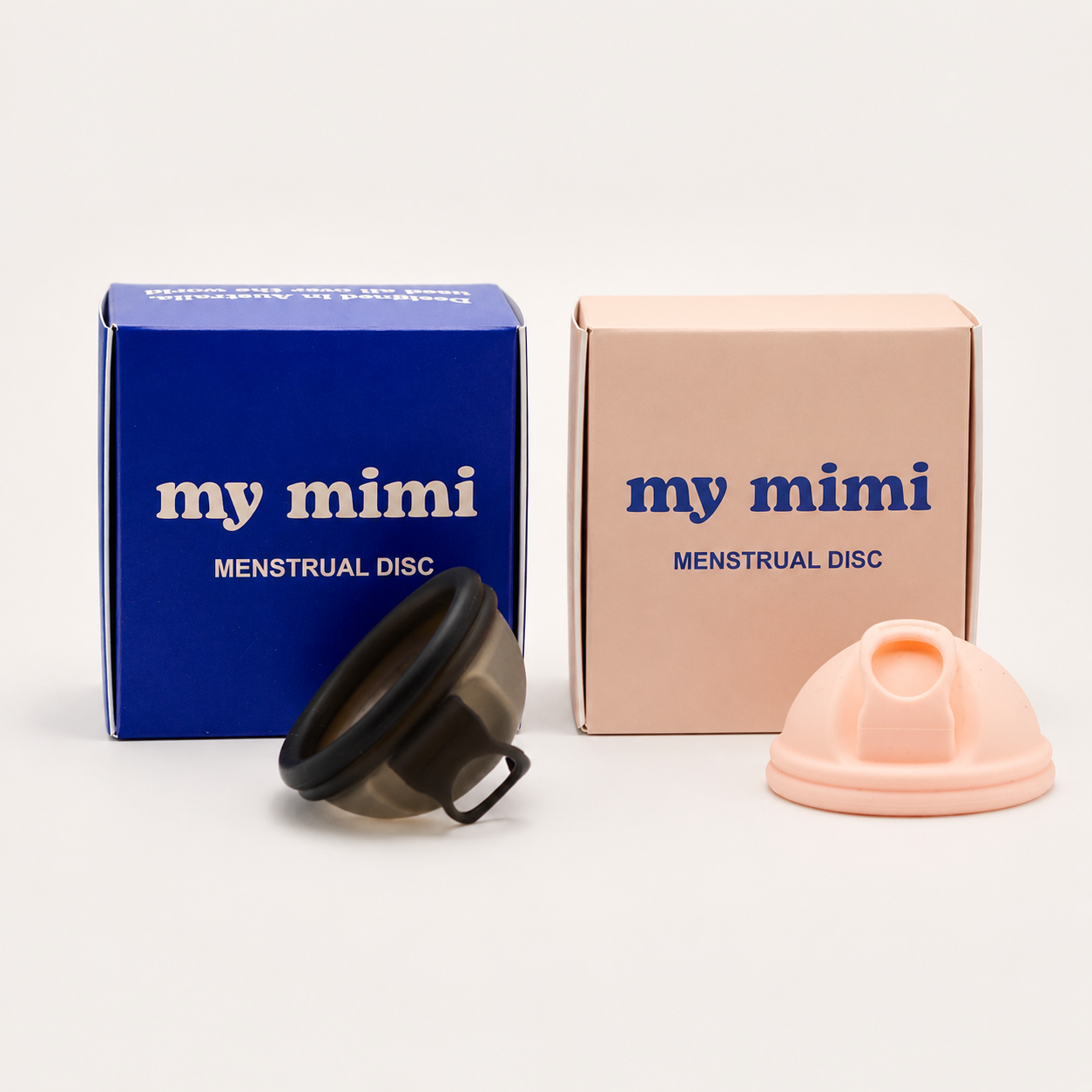
A menstrual disc collects fluid internally rather than absorbing it like a tampon.
The disc is designed to rest in the vaginal fornix, behind the pubic bone and below the cervix.
Unlike many cups, a disc stays in place through positioning rather than a suction seal.
A disc should not feel painful once it is positioned correctly. If it feels low, presses on the bladder or rectum, slips forward, or causes ongoing discomfort, remove it and reassess the fit.
Good positioning and the right fit make the biggest difference to comfort and confidence.
Both cups and discs are reusable period-care options, but they sit differently in the body. Cups generally sit lower in the vaginal canal and often use a suction seal. Discs sit higher, below the cervix, and are held in place by the pubic bone.
The best choice is the one that feels comfortable, suits your anatomy and can be used according to its instructions.
Learn what a menstrual disc is →Before using any internal period product, seek individual advice if you have a newly fitted IUD, are postpartum, have been advised about pelvic-floor conditions, have prolapse symptoms, or are unsure whether a disc is appropriate for you.
Stop using the disc and seek medical advice for severe pain, unusual bleeding, fever, persistent pelvic pressure, or if you cannot remove it after trying to relax and change position.
Contact my mimi support →The my mimi menstrual disc is made from soft medical-grade silicone and designed without cup-style suction. Choose the size that best suits your body, flow and comfort preferences, then follow the care and wear instructions supplied with your disc.
Tension can make insertion and removal harder. Give yourself privacy, time and a position that feels stable.
Guide the folded disc horizontally toward your tailbone, rather than inserting straight upward.
Once fully inserted, push the front rim behind the pubic bone so the disc sits securely.
Size, cervix height, flow and comfort all matter. Use the size guide rather than guessing.
Relax, bear down gently and change position. Seek medical help if you cannot remove the disc.
Persistent pain, pressure or symptoms that concern you deserve professional advice.
There is not enough evidence to make a universal recommendation for every person with prolapse. Because symptoms and anatomy vary, it is best to ask your GP, gynaecologist or pelvic-floor physiotherapist before using an internal period product if you have known prolapse.
A disc may feel low if it has not been inserted far enough back, the front rim is not tucked behind the pubic bone, it is too full, or the size and shape are not a comfortable match. Reposition it and use the my mimi fit guides for support.
Many people use discs for daily activity, swimming and exercise. Check your disc is comfortable and secure before you start, and remove it if you experience pain or significant discomfort.
People with IUDs should seek guidance from the clinician who placed the IUD before using an internal menstrual product, then follow both the device advice and the my mimi instructions carefully.

Your cart is currently empty.

Be the first to know about new collections and exclusive offers.