

Large Blood Clots During Your Period: What's Normal and What Isn't?
Date Created: 29 June 2026
Read Time: 8 minutes
Seeing a blood clot during your period can feel alarming, especially if it looks larger than usual. The good news is that menstrual blood clots are often a normal part of having a period, particularly on heavier flow days.
However, very large clots, frequent clotting or heavy bleeding that affects your daily life may be a sign that it is time to speak with a healthcare professional.
In this guide, we explain what menstrual blood clots are, when they are considered normal, what can cause larger clots and when you should seek medical advice.

What Are Period Blood Clots?
Menstrual blood is not made up of blood alone. It can also contain tissue from the uterine lining, cervical mucus and vaginal fluid.
During heavier periods, blood may collect inside the uterus or vagina faster than the body’s natural anticoagulants can break it down. When this happens, the blood can clot before it leaves the body.
Period blood clots may appear:
- bright red
- dark red
- brown towards the end of your period
- soft or jelly-like in texture
Are Blood Clots During Your Period Normal?
Yes, small blood clots during your period can be normal, especially during the first few days when menstrual flow is often heaviest.
Many people notice clots occasionally without there being an underlying medical condition.
Clots are generally more likely when:
- your flow is heavy
- you have been sitting or lying down for a long time
- your uterus sheds its lining quickly
What Size Blood Clot Is Considered Normal?
Small clots are usually not something to worry about. Many period clots are smaller than a 20-cent coin.
Occasional larger clots may still happen during a particularly heavy period, but if you regularly pass large clots, especially clots larger than a 50-cent coin, or you are bleeding heavily, it is worth speaking with your GP.
What Causes Large Blood Clots During Your Period?
Large menstrual clots can happen for several reasons. Some are temporary, while others may be linked to an underlying health condition.
Heavy menstrual bleeding
The heavier your flow, the greater the chance that blood will clot before leaving your body. Heavy bleeding can also mean your period products fill faster than usual.
Fibroids
Uterine fibroids are non-cancerous growths that can contribute to heavy bleeding, longer periods and larger blood clots.
If you have fibroids, you may also like our guide: Can You Use a Menstrual Disc With Fibroids?
Adenomyosis
Adenomyosis occurs when tissue similar to the uterine lining grows into the muscular wall of the uterus. It can sometimes cause heavy periods, painful periods and clotting.
Hormonal changes
Changes in oestrogen and progesterone can influence how thick the uterine lining becomes before it sheds. A thicker lining may sometimes lead to heavier bleeding or more clotting.
Pregnancy loss
In some situations, heavy bleeding with large clots may be associated with early pregnancy loss. If you think you may be pregnant, or you have severe pain or heavy bleeding, seek medical advice urgently.
When Should You See a Doctor About Period Clots?
You should speak with your healthcare professional if you:
- regularly pass clots larger than a 50-cent coin
- need to change a pad, tampon or menstrual disc every hour for several hours
- have periods lasting longer than seven days
- feel dizzy, faint or extremely tired
- have severe pelvic pain
- notice bleeding between periods
- experience sudden changes in your normal menstrual pattern
Heavy bleeding can sometimes lead to low iron or may be a sign of an underlying condition that needs assessment.
Can a Menstrual Disc Handle Blood Clots?
Yes, a menstrual disc can collect menstrual fluid and blood clots rather than absorbing them.
Many people with heavier periods like the higher capacity of a menstrual disc compared with tampons, although how often you need to empty it depends on your individual flow.
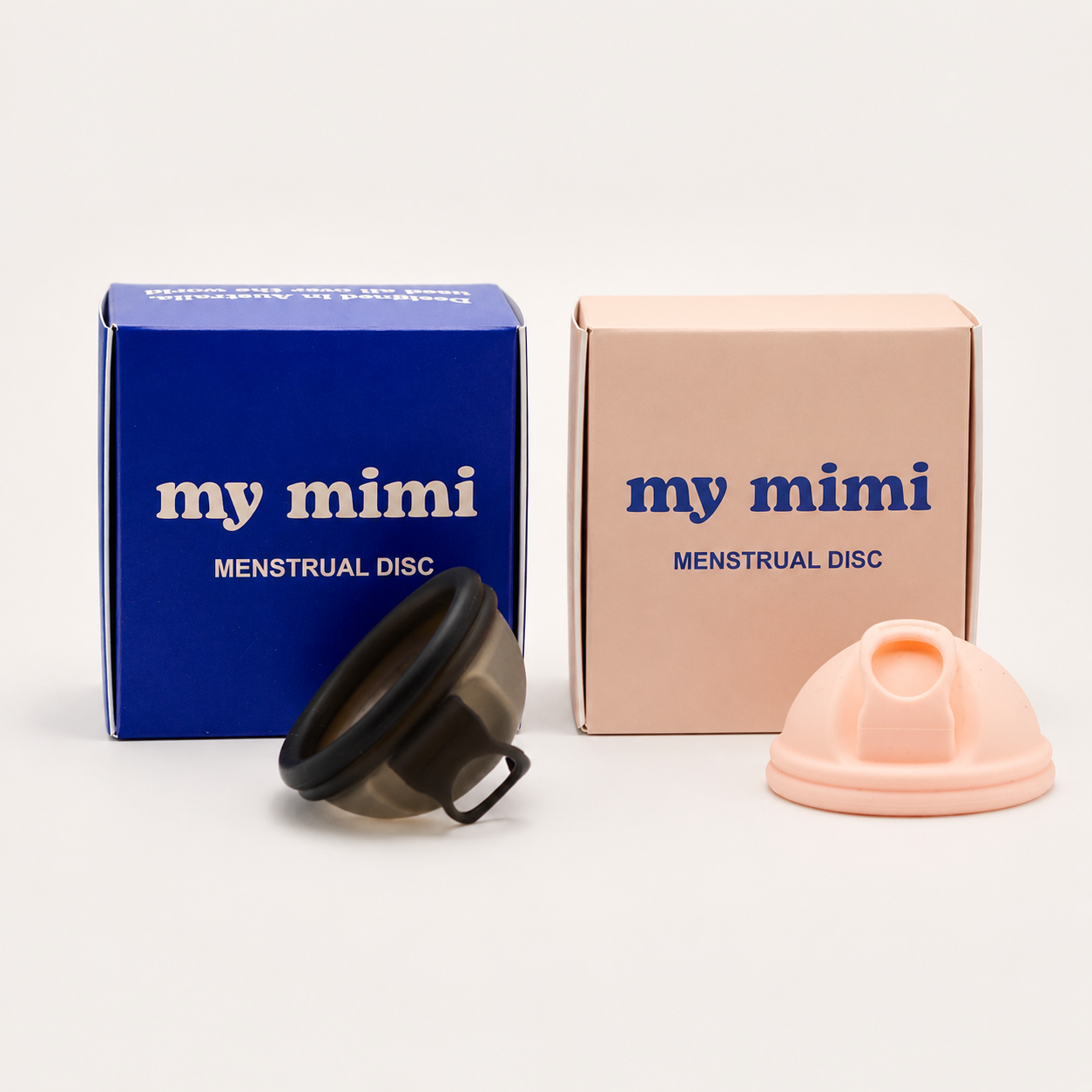
The my mimi menstrual disc is designed to collect menstrual fluid and can be worn for up to 12 hours, depending on your flow.
If heavy flow is one of your main concerns, read: Menstrual Discs for Heavy Flow: What Actually Works?
Can Blood Clots Cause Leaking?
Sometimes. If your flow is very heavy or you are passing larger clots, your period product may fill faster than expected.
With a menstrual disc, leaking can also happen if the disc is not tucked correctly behind the pubic bone or if it has reached capacity.
If leaking is happening often, this guide may help: Why Is My Menstrual Disc Leaking?
Is It Normal to Pass Clots Every Month?
For some people, yes. Occasional clotting can be part of a normal period, especially during heavier days.
What matters most is whether your clots are becoming larger, more frequent or are happening alongside symptoms such as very heavy bleeding, severe pain, dizziness or exhaustion.
If something feels different from your usual period, it is always worth getting checked.
How to Track Blood Clots and Heavy Flow
If you are unsure whether your bleeding is changing, tracking your period can help. You may want to note:
- how many days your period lasts
- which days are heaviest
- how often you need to change or empty your period product
- the approximate size of any clots
- whether you have pain, fatigue or dizziness
This information can be useful if you decide to speak with your GP.
You can also use our free period tracker to better understand your cycle.
Frequently Asked Questions
Are jelly-like blood clots normal during your period?
Yes, menstrual blood clots often look soft, thick or jelly-like. This can be normal, especially on heavier flow days.
Do blood clots mean I have fibroids?
Not always. Fibroids can contribute to heavy bleeding and clotting, but many people who pass clots do not have fibroids.
Can stress cause blood clots during your period?
Stress can affect hormones and cycle regularity, but it is not usually considered a direct cause of menstrual blood clots.
Can a menstrual disc collect blood clots?
Yes, a menstrual disc collects menstrual fluid and clots together rather than absorbing them.
Should I worry about one large clot?
One larger clot during a heavy period does not always mean something is wrong. However, if large clots happen regularly, your bleeding is very heavy or you have severe pain, speak with a healthcare professional.
The Bottom Line
Blood clots during your period are often normal, particularly on your heaviest days. Most clots happen because menstrual blood collects faster than your body can naturally break it down.
However, very large clots, frequent clotting, heavy bleeding or sudden changes to your cycle should not be ignored.
Understanding what is normal for your own body can help you recognise when something has changed and when to seek medical advice.
Health Notice: This article is intended for general educational purposes only and should not be considered medical advice. If you experience very heavy bleeding, large or frequent blood clots, severe pain, dizziness, fatigue or sudden changes to your menstrual cycle, please consult your GP, gynaecologist or another qualified healthcare professional.
Featured collection

my mimi - reusable menstrual disc