Date Created: 30th of April 2025 Read Time: 4 minutes
"The vaginal canal is only about 7-10cm deep, so nothing can get ‘lost’ up there!"
Even knowing that, it can still feel stressful when your menstrual disc seems stuck. If you have ever been mid-removal thinking, “How do I get this out?” you are not alone. The reassuring news is that a menstrual disc cannot travel past the cervix, and in most cases it is simply sitting high or angled in a way that makes it harder to reach.
This guide explains how to tell whether your disc is actually stuck, the safest way to remove it step by step, why it happens, how to prevent it next cycle, and when it is time to seek medical help.
Interactive menstrual disc guide
Your Disc Is Not Lost
Take a breath. A menstrual disc cannot travel beyond the vaginal canal.
Follow these calm, practical steps one at a time.
✓
First, pause.
Tension can tighten the pelvic floor and make the disc harder to reach.
Step 1 of 4
Step 1
Relax your body first
Sit or lie somewhere comfortable. Unclench your jaw, lower your
shoulders and take five slow belly breaths before trying again.
Try this:
Breathe in for four counts and out for six.
Step 2
Choose a better position
Squat low, sit backwards on the toilet or lie down with your knees
bent. Changing position can bring the disc closer within reach.
Best starting point:
A deep supported squat often shortens the vaginal canal.
Step 3
Bear down gently
Use the same muscles you would use to pass wind. Gentle downward
pressure can move the disc lower without forceful pulling.
Important:
Use steady pressure rather than repeated straining.
Step 4
Find the rim or removal loop
Slide one clean finger along the vaginal wall until you feel the
rim or loop. Hook underneath it and guide the disc out slowly at a
downward angle.
Do not force it:
Pause and rest for 10 minutes if your muscles tighten again.
!
Still unable to remove it?
Stop if removal is painful. If you still cannot reach or remove the
disc after several calm attempts, contact a qualified healthcare
professional for help.
General guidance only. Seek urgent medical care for severe pain, heavy
unexpected bleeding, faintness, fever or other concerning symptoms.
how to tell if your menstrual disc is actually stuck
A menstrual disc sits in the vaginal fornix, just below the cervix. It cannot move into the uterus or “disappear” inside you. If it feels stuck, it is usually because it has:
shifted higher than expected
tucked firmly behind the pubic bone
angled slightly, making the rim harder to hook
become harder to grip due to tension in the pelvic floor
People with a higher cervix or a strong pelvic floor often notice the disc sits higher during some parts of their cycle. The first and most helpful step is to relax. Tension can make removal much harder than it needs to be.
how to remove a stuck menstrual disc step by step
relax your pelvic floor muscles
Your pelvic floor works like a supportive sling. When you feel stressed, it can tighten without you realising, keeping the disc higher and harder to reach. Try this before you attempt removal:
Lie on your back with knees bent and feet flat (or sit comfortably on the toilet)
Take slow belly breaths - inhale through the nose, exhale through the mouth
Relax your jaw, shoulders, and abdomen
Give yourself 60-90 seconds before trying again
get into a removal-friendly position
Changing position can shift the disc into reach. Try one of the following:
Squatting in the shower
Sitting backward on the toilet
Lying down with feet flat and knees bent
If one position does not help, switch to another. Small changes in angle can make the rim much easier to feel.
bear down to lower your menstrual disc
Gently “bear down” using the same muscles you would use to pass wind. This can nudge the disc lower so it becomes easier to reach. Keep it gentle - you want a steady push, not strain.
find the rim or use the loop tab
Slide a clean finger along the vaginal wall until you feel the disc’s rim. Hook underneath the rim and pull slowly at a downward angle.
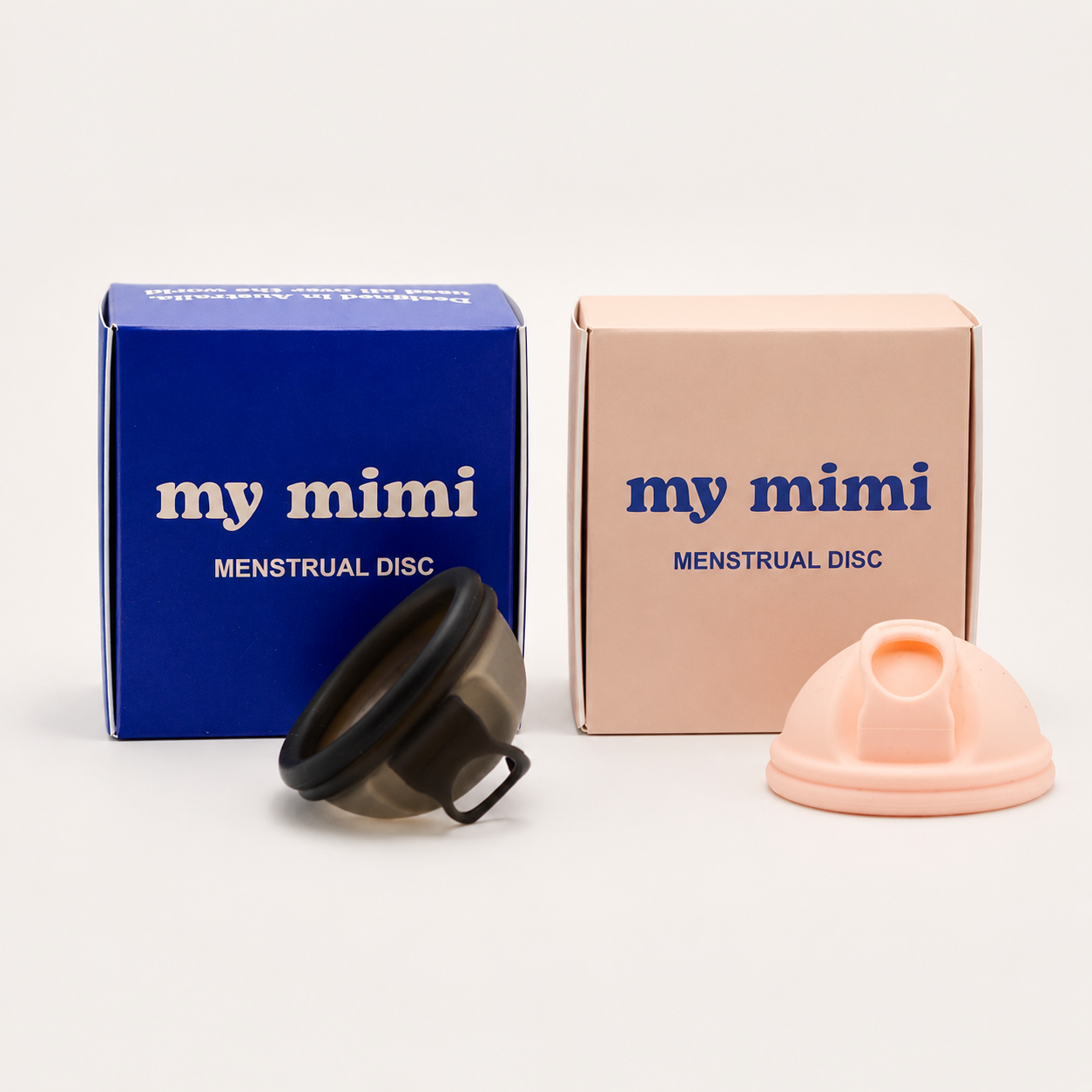
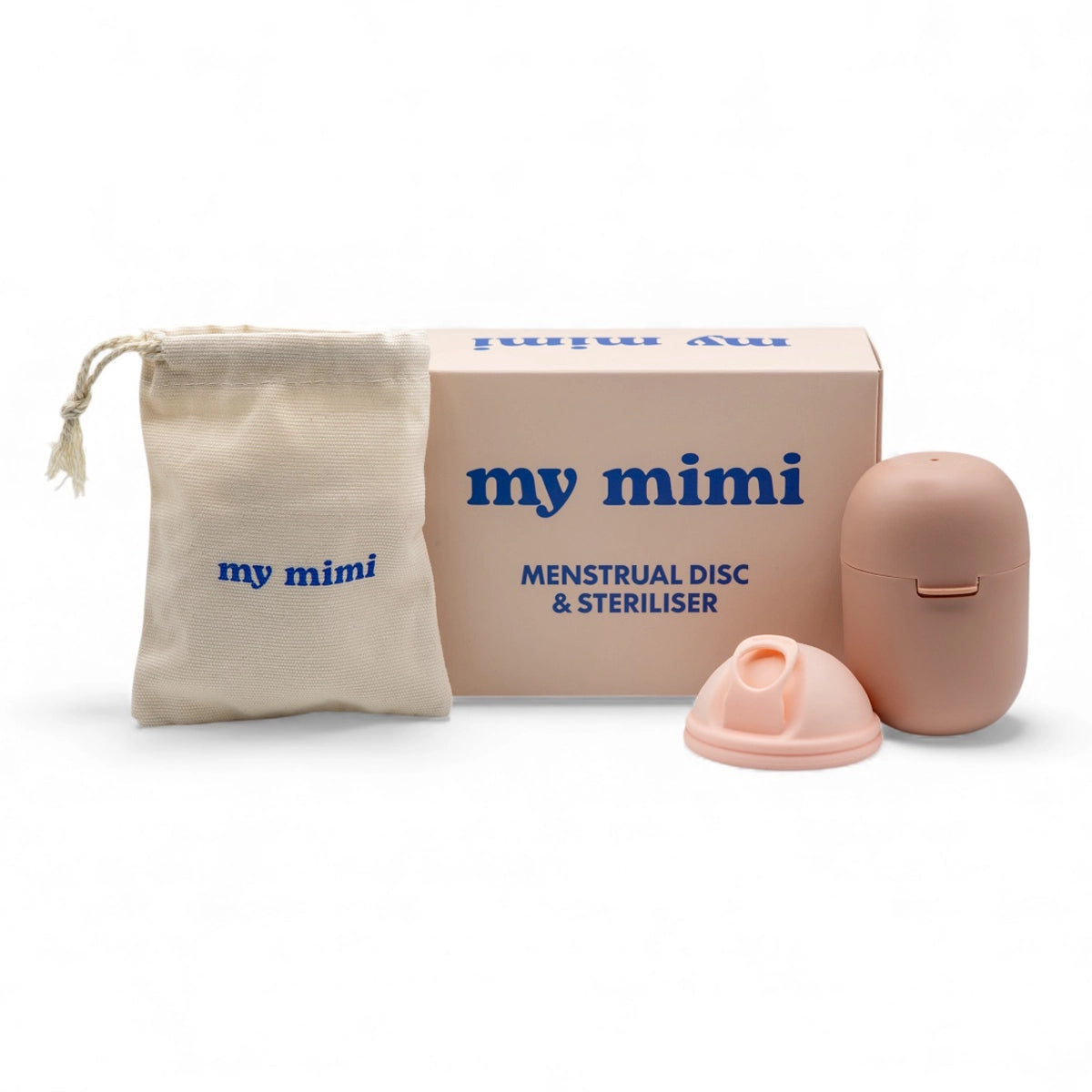
If you are using a my mimi disc, the loop tab can make this step easier. Hook a finger through the loop tab, then guide the disc down and out slowly while keeping it slightly tilted.
stay patient and take breaks if needed
If it does not come out immediately, do not panic. Pause, breathe, and try again in a different position. Many discs naturally lower over time due to gravity and movement, especially after walking around for a few minutes.
why menstrual discs can feel stuck
your cervix may be high or angled
A high cervix or a tilted uterus can make the disc sit deeper. This is not dangerous, but it can make removal feel more difficult if the rim is harder to reach.
The my mimi menstrual disc comes in two sizes:
Small: 32ml capacity (up to 5 regular tampons)
Large: 61ml capacity (up to 7 regular tampons)
Both sizes feature a removal loop which can be especially helpful if your disc sits higher.
your pelvic floor muscles are too tight
Tight pelvic floor muscles can hold the disc in place more firmly, particularly if you are anxious about removal. Breathwork, gentle technique, and practice often help. If you regularly experience pelvic tension or discomfort, a pelvic floor physiotherapist may be able to support you.
the disc may be too full
On heavy flow days, a full disc can feel more wedged behind the pubic bone. If you suspect your disc is full, try to stay calm, change positions, and bear down gently. Many people find that after 10-15 minutes, the disc shifts lower and becomes easier to remove.
when to seek help if your menstrual disc won’t come out
If you have tried relaxing, repositioning, bearing down, and using the loop tab but still cannot reach your disc after 6-8 hours, contact a medical professional. They are trained to help with this quickly and safely, and it can reduce stress.
frequently asked questions about a stuck menstrual disc
can a menstrual disc get lost inside me?
No. A menstrual disc cannot travel past the cervix. If it feels “lost,” it is usually sitting higher or angled in a way that makes the rim harder to reach. If you want to better understand disc placement, our guide on cervix position can help.
what if i cannot reach the rim?
Change positions, relax your pelvic floor, and bear down gently. These steps often bring the disc into reach. If you use a disc with a loop, the loop can help with grip - see how the loop tab supports easier removal.
does heavy flow make a disc harder to remove?
It can. A fuller disc may sit more firmly behind the pubic bone. If you have a heavy flow, consider emptying more often and choosing the size that suits your body. If you are unsure, our guide to choosing a menstrual disc can help.
should i remove my disc in the shower?
Many people find the shower helpful because warmth can relax muscles, and it can feel lower-pressure if you are worried about spills. Squatting in the shower is a common go-to position for easier access.
when should i get medical help?
If you cannot remove your disc after 6-8 hours of trying calm technique, or if you experience significant pain, seek medical support. For additional removal guidance first, review how to remove a menstrual disc.
final thoughts on stuck menstrual discs and removal confidence
Removal confidence builds with practice. If your disc feels stuck, it usually means your body is tense, the disc is sitting high, or it is wedged behind the pubic bone - not that anything is wrong.
The my mimi disc was designed to support real-life use, including removal confidence. With two sizes, high capacity options, and a loop tab for easier handling, many people find it easier to stay in control of their period care.
Health Notice: This article is for information purposes only. It is not a substitute for medical advice. If you are experiencing symptoms of anxiety, depression or other mental health concerns, consult a qualified health professional.