why your menstrual disc pops out and how to fix it
Date updated: 30 April 2025 · Read time: 6 minutes
Fit & troubleshooting guide
Why Does My Menstrual Disc Keep Popping Out?
If your menstrual disc keeps popping out, slipping forward or feeling like it will not stay tucked in place, you are not alone. It is one of the most common questions from people learning to use a disc.
Most of the time, a menstrual disc that will not stay in place comes down to insertion angle, positioning behind the pubic bone, fit, or pressure from your pelvic floor. This guide explains the common causes and practical ways to help your my mimi menstrual disc feel more secure.
Quick answer
Why does a menstrual disc pop out?
A menstrual disc can pop out when the front rim is not tucked securely behind the pubic bone, the disc is sitting too low, the fit is not right for your body, or pressure from movement, coughing or a bowel movement shifts it forward. In many cases, reinserting it horizontally and tucking the front rim higher resolves the issue.
A quick reassurance
Learning your fit can take a little practice
A menstrual disc does not use suction. It stays in place when the front rim sits behind your pubic bone and the collection basin sits beneath your cervix. A small adjustment to your angle or tuck can make a noticeable difference.
It is normal to need a few attempts, or even a cycle or two, to learn what feels right for your body. Go slowly, use clean hands and take pressure off yourself to get it perfect on the first try.
This is the most common reason. The front rim needs to be pushed up and tucked behind the pubic bone so it can stay secure when you move.
Try this: After inserting, use a clean finger to push the front rim up and back until it feels like it has caught in place.
2
It is sitting too low
A disc sitting too shallow may shift forward, feel less secure or miss the cervix. This can happen when you are understandably cautious during insertion.
Try this: Aim the folded disc back toward your tailbone, rather than straight up, before tucking the front rim.
3
The fit may not be right for you
Cervix height, anatomy, flow and comfort preferences can all affect how a disc sits. A disc that is not the right size or shape may be harder to keep comfortably tucked.
Standing with one leg raised works well for some people, but it is not the only option. Try sitting on the toilet, squatting in the shower, or lying on your back with your knees bent.
The best position is simply the one that helps you relax your pelvic muscles and gives you the most control.
If the disc catches, folds awkwardly or feels difficult to guide into place, a small amount of water-based lubricant on the rim may help it slide in more smoothly.
Avoid silicone-based lubricant with silicone period products unless the product instructions specifically say it is compatible.
Could a disc that keeps popping out mean something else?
Persistent fit problems are not a reason to panic, but they can be a good reason to speak with a qualified health professional or pelvic floor physiotherapist, particularly if you have pain, pressure, unusual symptoms or concerns after pregnancy.
Low cervixA different size or shape may suit you better.
PostpartumYour body may still be adjusting after birth.
Ongoing painStop using the disc and seek medical advice.
Persistent slippingA pelvic health professional can help assess fit concerns.
Final advice when your menstrual disc will not stay in
01
Do not rush the learning curve
It is completely normal for the technique to take a few tries or cycles to feel natural.
02
Make one change at a time
Adjust your angle, tuck or position one at a time so you can work out what improves the fit.
03
Check your size
A better size match can make a meaningful difference to comfort, security and confidence.
04
Use backup while learning
A liner or period underwear can provide extra reassurance while you build confidence with insertion.
05
Listen to your body
A disc should not cause pain or ongoing discomfort. Stop and seek advice if something does not feel right.
06
Ask for help when needed
Our education guides can help, and a health professional can offer individual advice for persistent concerns.
Why my mimi
A reusable menstrual disc designed for everyday confidence
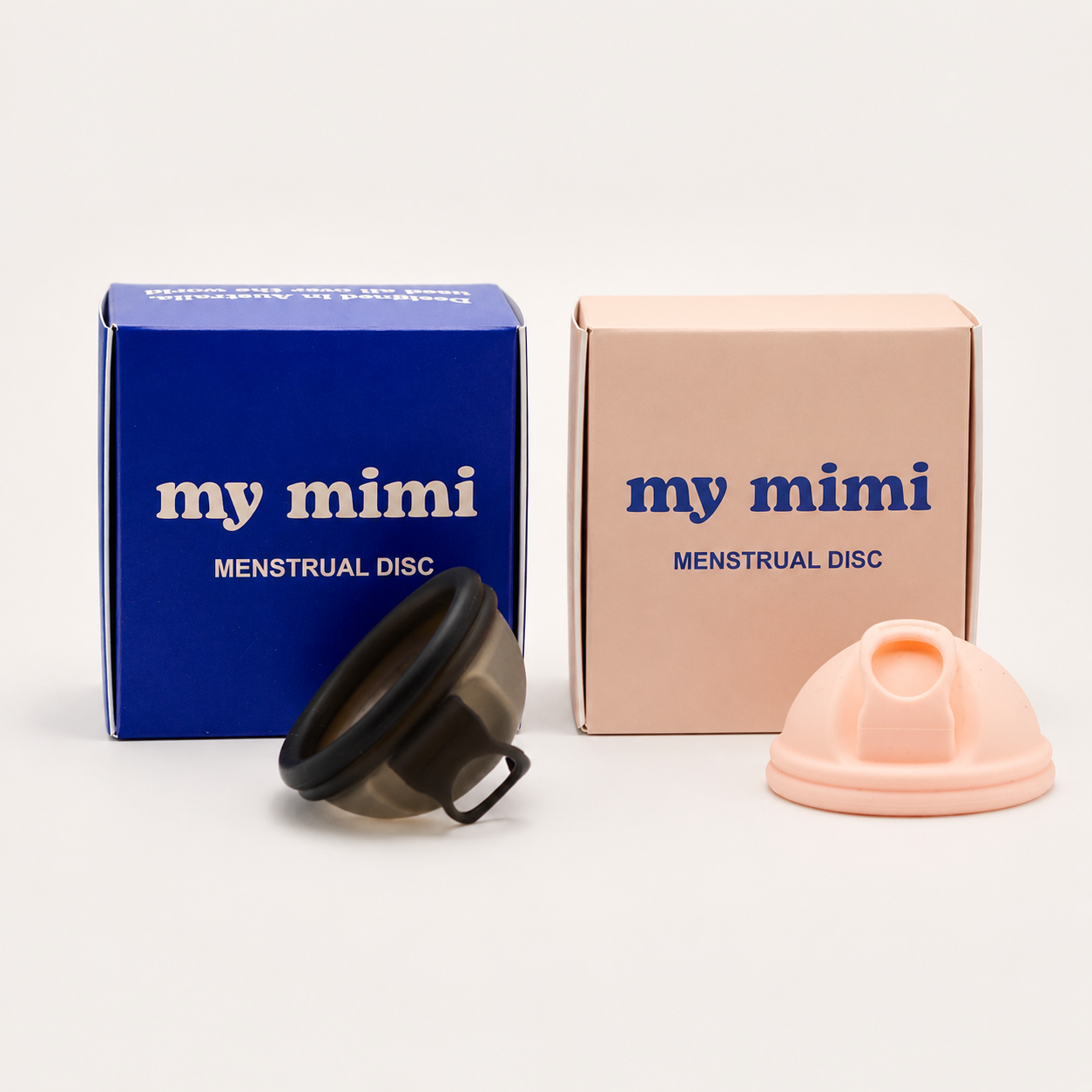
The my mimi menstrual disc is made from soft medical-grade silicone and designed with a suction-free fit, two size options and an integrated loop tab to support easier removal.
Explore the disc, use the size guide and give yourself time to learn what works best for your body.
Soft siliconeMedical-grade material
Suction-freeNo cup-style suction
Loop tabRemoval support
2 sizesSmall and Large options
Up to 12 hoursWear time depends on your flow
ReusableLong-term period care
Frequently asked questions about a menstrual disc popping out
Why does my menstrual disc keep slipping forward?
It may not be tucked fully behind the pubic bone, it may be sitting too low, or the fit may not be right for your body. Reinsert it horizontally toward your tailbone and check the front rim is securely tucked.
Should I be able to feel my menstrual disc?
When positioned correctly, a menstrual disc should generally feel comfortable and unobtrusive. If you feel ongoing pressure, pain or rubbing, remove it and try repositioning it.
Can coughing or going to the toilet make a menstrual disc move?
Pelvic pressure can sometimes shift a disc, particularly when it is not fully tucked in place. Checking the tuck after a bowel movement can be helpful.
Does a low cervix affect menstrual disc fit?
It can. Cervix height may affect which size, shape and insertion approach feels most secure. Use a size guide and consider professional advice if fit issues persist.
When should I speak with a health professional?
Speak with a qualified health professional if you experience pain, ongoing discomfort, unusual symptoms, concerns after pregnancy, or persistent fit problems despite trying different techniques.
Health notice: This guide provides general period-care information and is not medical advice. Stop using your disc and speak with a qualified health professional if you experience pain, persistent discomfort, unusual symptoms or difficulty removing the disc.