

can a menstrual disc cause toxic shock? TSS
Date Updated: 27th of January 2026
Read Time: 5 minutes
Quick answer
Menstrual discs have a very low risk of Toxic Shock Syndrome (TSS) when used correctly. Because discs collect rather than absorb menstrual fluid, they are considered lower risk than high-absorbency tampons. Following recommended wear times and hygiene practices is key.
Do menstrual discs cause Toxic Shock Syndrome (TSS)?
Understanding menstrual discs and TSS risk
Toxic Shock Syndrome (TSS) is a rare but serious condition most commonly linked to high-absorbency tampons and poor hygiene practices. As reusable menstrual discs like my mimi become more popular across Australia, many people want to understand whether they carry the same risks.
The short answer is that menstrual discs are considered lower risk than tampons. This is largely due to how they work and the materials they are made from.
What is Toxic Shock Syndrome?
TSS is caused by toxins produced by certain strains of bacteria, most commonly Staphylococcus aureus or Streptococcus pyogenes. These bacteria can multiply when blood and moisture remain trapped for extended periods.
Symptoms may include sudden fever, rash, vomiting, muscle aches, dizziness, or low blood pressure. While TSS is rare, it is a medical emergency and requires immediate attention.
Why menstrual discs are considered lower risk
Unlike tampons, menstrual discs do not absorb blood or dry out the vaginal environment. Instead, a disc sits in the vaginal fornix and collects menstrual fluid.
This design:
- Reduces prolonged blood contact with absorbent fibres
- Does not alter vaginal pH
- Provides fewer surfaces for bacteria to cling to
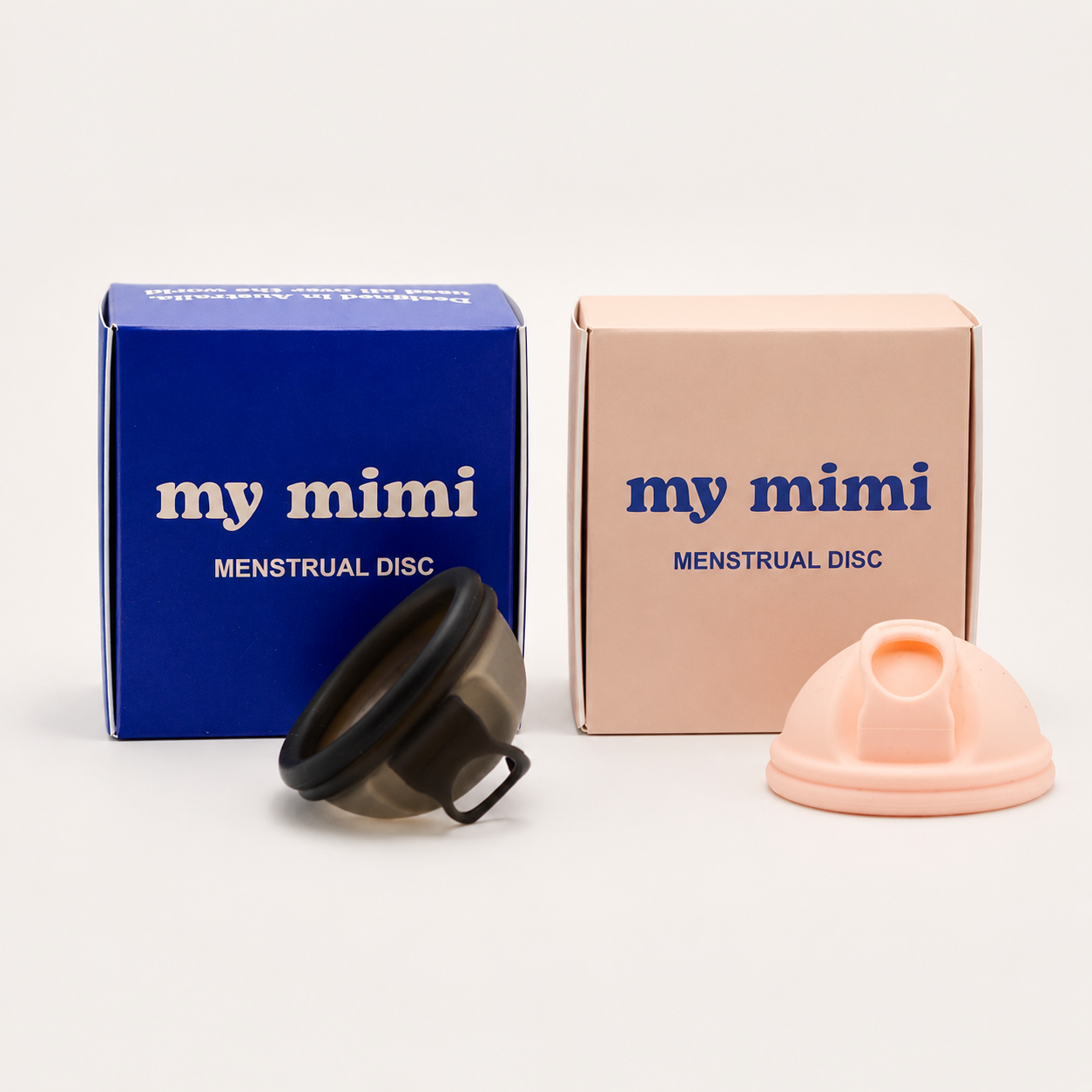
The my mimi menstrual disc is made from 100% medical-grade silicone and is TGA-compliant and FDA-registered. It is a trusted, established product used by thousands of customers and recognised as “Best Sustainable Period Care Solution in Australia 2025”.
How to minimise any risk of infection
While the risk of TSS with menstrual discs is extremely low, safe use matters. Follow these best-practice guidelines:
- Empty every 8-12 hours: Do not exceed recommended wear times.
- Wash hands before and after handling: This reduces bacterial transfer.
- Clean thoroughly between cycles: Boil the disc for 3-5 minutes or follow the menstrual disc cleaning guide.
- Choose the right size: Proper fit improves comfort and reduces irritation. Use the menstrual disc size guide if unsure.
Menstrual disc vs menstrual cup – TSS considerations
A common question is the difference between menstrual discs and menstrual cups in relation to TSS.
Cups rely on suction to stay in place, while discs sit naturally under the cervix without suction. This difference can make discs more comfortable for extended wear and less likely to cause irritation.
You can read more about the differences in the guide on menstrual cups vs menstrual discs.
Can you use a menstrual disc overnight?
Yes. Menstrual discs like my mimi are designed for up to 12 hours of wear, making them suitable for overnight use when inserted correctly.
This makes them a popular choice for heavy flow days, sleeping, exercise, and swimming.
Cost-effective and eco-friendly period care
A single my mimi menstrual disc lasts up to five years, replacing thousands of disposable pads and tampons.
At approximately 83 cents per month over its lifespan, it offers one of the most affordable and sustainable period care options available in Australia.
What to do if you notice unusual symptoms
If you experience symptoms such as fever, dizziness, rash, or vomiting while using a menstrual disc, remove it immediately and seek medical advice.
While TSS is rare, knowing the signs and acting early is important.
Final thoughts
There is no evidence that menstrual discs cause Toxic Shock Syndrome when used correctly. With proper hygiene, correct sizing, and adherence to wear-time guidelines, menstrual discs are considered a safe alternative to tampons.
With its medical-grade materials, two-size system, and award-winning design, my mimi offers reliable, low-risk, and sustainable period care.
Health Notice: This article is for information purposes only. It is not a substitute for medical advice. If you are experiencing symptoms of anxiety, depression or other mental health concerns, consult a qualified health professional.
Featured collection

my mimi - reusable menstrual disc