

Beginner guide · Menstrual discs
Common beginner mistakes with menstrual discs (and how to fix them)
If your first try involved a leak, an awkward angle or ten minutes wondering whether the disc had disappeared, you are not doing it wrong—you are learning a new technique.
The most important fix: aim the menstrual disc back towards your tailbone, guide the rear rim beneath your cervix, then tuck the front rim behind your pubic bone. Most beginner leaks come down to one of those three placement steps—not a lack of effort or a body that is “wrong”.
Menstrual discs look simple: a flexible rim and a bowl that collects flow. The technique, however, is different from inserting a tampon or menstrual cup. A disc sits high in the vaginal fornix, just below the cervix, with its front rim supported behind the pubic bone. It does not sit vertically and it does not rely on cup-style suction.
That unfamiliar placement creates a learning curve. An early leak, a disc that feels too low or a messy removal does not necessarily mean the product will never suit you. Small changes in direction, relaxation, timing and fit often make the difference. Use this guide alongside the instructions supplied with your product, and never push through significant pain.
Mistake 1: aiming upwards instead of backwards
The vaginal canal angles back towards the tailbone; it is not a straight vertical tunnel. A beginner may instinctively aim a folded disc upwards, especially if that is how they picture tampon insertion. The disc can then meet the front vaginal wall, unfold too early or stop before the rear rim reaches the space beneath the cervix.
Try this: pinch the rim into a narrow oval and think “back and in”. Keep the leading edge relatively horizontal. Sitting on the toilet, squatting or raising one leg may help you relax and find the angle. A small amount of water-based lubricant on the rim can reduce friction; avoid oil-based products that may be incompatible with silicone.
Mistake 2: passing beside the cervix
If a disc leaks almost immediately, menstrual fluid may be flowing around it rather than into it. This can happen when the rear rim travels too high or to one side, leaving the cervix outside the bowl. Because the disc is fully inside, it may still feel as though insertion is complete.
After inserting, use a clean finger to feel through the disc bowl if that is comfortable for you. You may be able to identify the cervix as a firmer, rounded shape through the thin material. Not everyone can reach or recognise it, so treat this as an optional check. Reinsert lower and further back if you suspect the cervix has been missed.
Beneath the cervix
The bowl sits below the cervix and the front rim is supported behind the pubic bone.
Cervix missed
The rim can pass beside the cervix, allowing flow to travel outside the bowl.
Front rim untucked
The front edge sits low instead of being pushed up behind the pubic bone.
Mistake 3: forgetting the final tuck
Getting the disc fully inside is only part of insertion. The front rim must be pushed upwards behind the pubic bone. If it remains low, the disc may slide towards the vaginal opening, feel obvious during movement or release fluid.
Try this: once the rear rim is as far back as it comfortably goes, use a clean finger to lift the front rim. Stand, sit and walk for a moment. A correctly positioned disc should generally feel secure and almost unnoticeable. Follow my mimi’s disc placement check if you are unsure.
Mistake 4: assuming every leak is an insertion problem
Placement is a common cause, but a disc can also leak because it is full, has shifted during a bowel movement, or does not suit your anatomy. On a heavy day, even a high-capacity product may need emptying sooner. Some people experience “auto-dumping”, where pelvic-floor movement while using the toilet temporarily untucks the front rim and releases some fluid. It should retuck afterwards; repeated leaking during normal movement is different.
Track when the leak begins. Immediate leaking suggests the cervix may be outside the bowl. Leaking after several hours may mean the disc needs emptying. Slipping or pressure can point to fit. The menstrual disc leak troubleshooter can help narrow it down.
Mistake 5: treating size advice as a strict rule
Age and vaginal birth history are useful starting points, but they cannot describe the whole vaginal fornix. Cervix height, rim firmness, pelvic-floor tone, capacity needs and comfort matter too. A disc that is too large may create pressure or resist staying tucked. One that is too small may feel unstable or slip.
Do not keep wearing a disc that causes persistent discomfort simply because a chart recommended that size. Review the my mimi size guide and quiz, and contact the brand or a qualified healthcare professional when symptoms—not just fit questions—are involved.
Mistake 6: tensing and forcing insertion
Anticipating discomfort can make the pelvic-floor muscles tighten, which narrows the vaginal opening and makes insertion or removal harder. Repeated force can create irritation and turn practice into a stressful experience.
Pause if your body is resisting. Unclench your jaw, drop your shoulders and take a slow breath out. Change position, add a little water-based lubricant or try again another day. Insertion may feel unusual, but sharp pain, significant pressure or continuing pain is not a learning milestone to push through.
Interactive troubleshooting guide
What is happening with your disc?
Choose the closest description. You will get a likely explanation and a calm next step. This guide cannot diagnose pain, infection or another health condition.
Check whether the cervix is inside the bowl
An immediate leak commonly points to placement rather than capacity.
- Remove and refold the disc.
- Aim back towards the tailbone, not upwards.
- Guide the rear rim fully beneath the cervix, then tuck the front.
Your disc may be reaching capacity
Note how long you wore it and whether this is a heavier-flow day. Empty sooner and use backup protection while learning your pattern. Persistent leaks can also signal a fit issue.
Retuck the front rim
Use a clean finger to push the front rim upwards behind your pubic bone. If it repeatedly slips down, review insertion depth and sizing rather than continually forcing it higher.
Stop and reassess the fit
Bladder pressure or persistent discomfort can occur when a disc is too firm, too large or incorrectly positioned. Remove it. If symptoms continue without the disc—or you have pain or difficulty urinating—seek medical advice.
Relax before reaching again
Sit on the toilet or squat, breathe slowly and bear down gently as though having a bowel movement. Hook the loop or front rim and keep the disc level. Never use tools or force; seek medical help if you cannot remove it.
This may be auto-dumping
Pelvic-floor movement during a bowel movement can temporarily untuck some discs. Check that the rim has returned behind the pubic bone afterwards. Leaking while walking or sitting is not the same and deserves a placement or fit check.
Mistake 7: pulling quickly or at the wrong angle
A disc holds fluid in a flexible bowl. Pulling it sharply downwards can tip the contents before it clears the vaginal opening. Gripping and yanking while the muscles are tense can also make removal feel more difficult.
Remove it over the toilet or in the shower while learning. Sit, relax and gently bear down to bring the front rim closer. Hook the integrated loop or front rim, untuck it, then draw the disc out slowly while keeping it as level as possible. Some mess is normal; removal usually becomes more controlled with practice. Read the complete removal guide for step-by-step support.
Mistake 8: panicking when the disc feels out of reach
A menstrual disc cannot pass through the cervix or become lost in the rest of your body. It can sit higher at certain times, and anxiety can tighten the pelvic floor and make it feel even further away. The safest response is usually to pause rather than repeatedly reaching and irritating the tissue.
Wash your hands, sit or squat, exhale and bear down gently. Try again after a short break if needed. Never use tweezers or another object. If you remain unable to remove the disc, or experience significant pain, contact a healthcare professional for assistance.
Mistake 9: overlooking wear time and cleaning
A reusable product still needs a routine. Wash your hands before insertion and removal. Clean the disc during your period using warm water and a mild, fragrance-free, silicone-safe cleanser, then rinse thoroughly. Sanitise it before first use and between cycles according to the product instructions, allow it to dry fully and store it in a breathable pouch.
The my mimi disc is designed for up to 12 hours of wear, depending on flow. Twelve hours is the maximum—not a goal. Empty sooner when necessary. Avoid bleach, harsh chemicals, fragranced washes, abrasive tools and oil-based products unless the manufacturer specifically confirms compatibility. Replace a product that is torn, cracked, sticky or otherwise damaged.
What beginners often get right
Beginners notice their bodies. They ask questions, experiment with position and recognise when something does not feel comfortable. Those are strengths. There is no prize for inserting a disc on the first attempt, wearing it for the maximum time or removing it without a drop spilled.
Use backup protection during early attempts. Practise somewhere private without a deadline. Record whether leaking started immediately or later, and notice comfort rather than repeatedly checking. If the same problem continues after adjusting placement, revisit size or ask for product support. If there is pain, unusual discharge, fever, urinary symptoms or symptoms that continue after removal, seek healthcare advice.
When to stop and get help
- Stop using the disc if you have sharp or significant pain, numbness, persistent bladder pressure or difficulty urinating.
- Speak with a healthcare professional about ongoing pain, unusual or offensive-smelling discharge, itching, sores, recurrent urinary symptoms or bleeding that is new or unusual.
- Seek help if a disc cannot be removed after calm attempts; do not use tools or force.
- Seek urgent medical care for possible toxic shock syndrome symptoms, severe pelvic pain, fainting or feeling acutely unwell.
Menstrual discs are not contraception and do not protect against sexually transmitted infections. If you use an IUD, avoid pulling the strings and ask your clinician for individual guidance when unsure.
A softer start
Designed to make the learning curve feel less intimidating
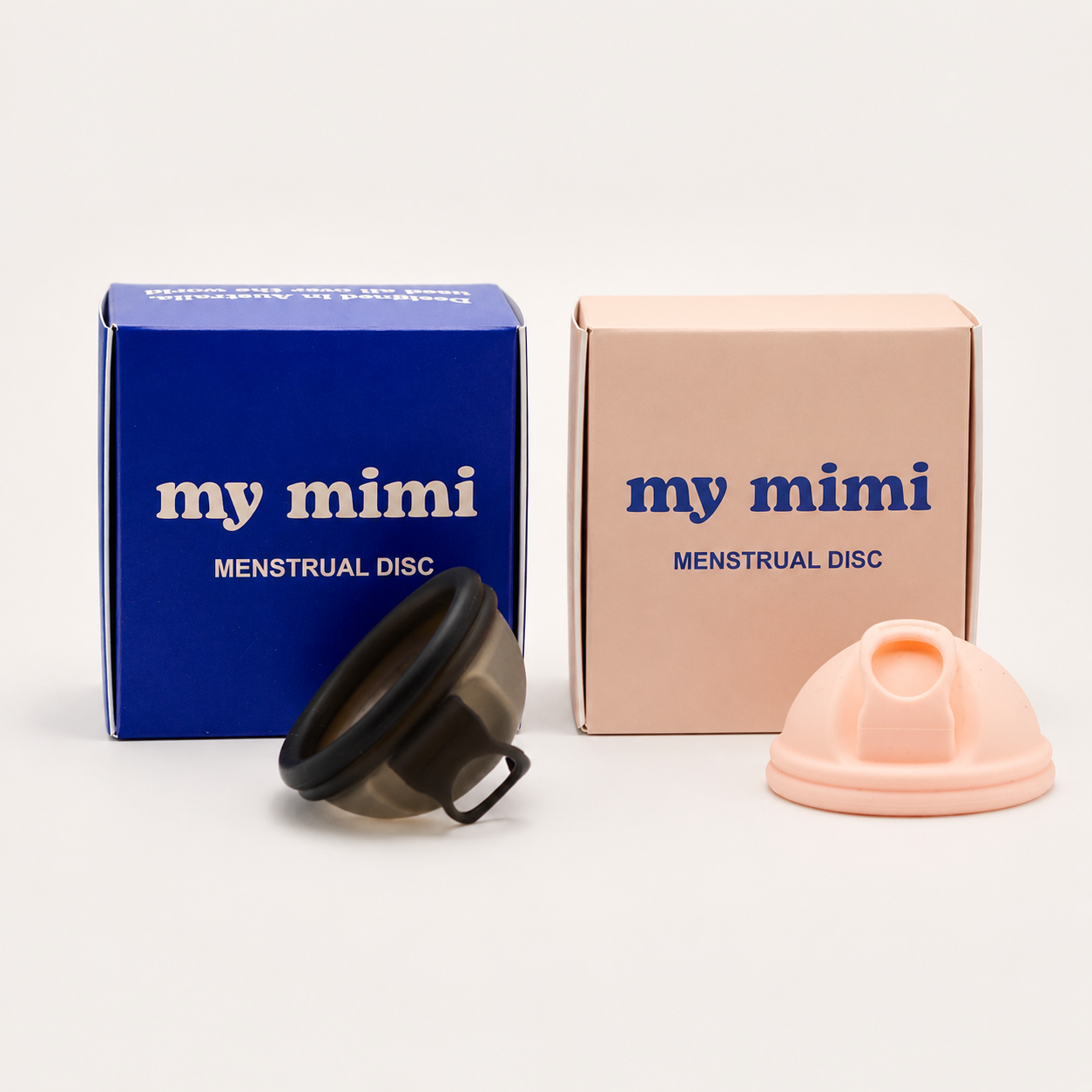
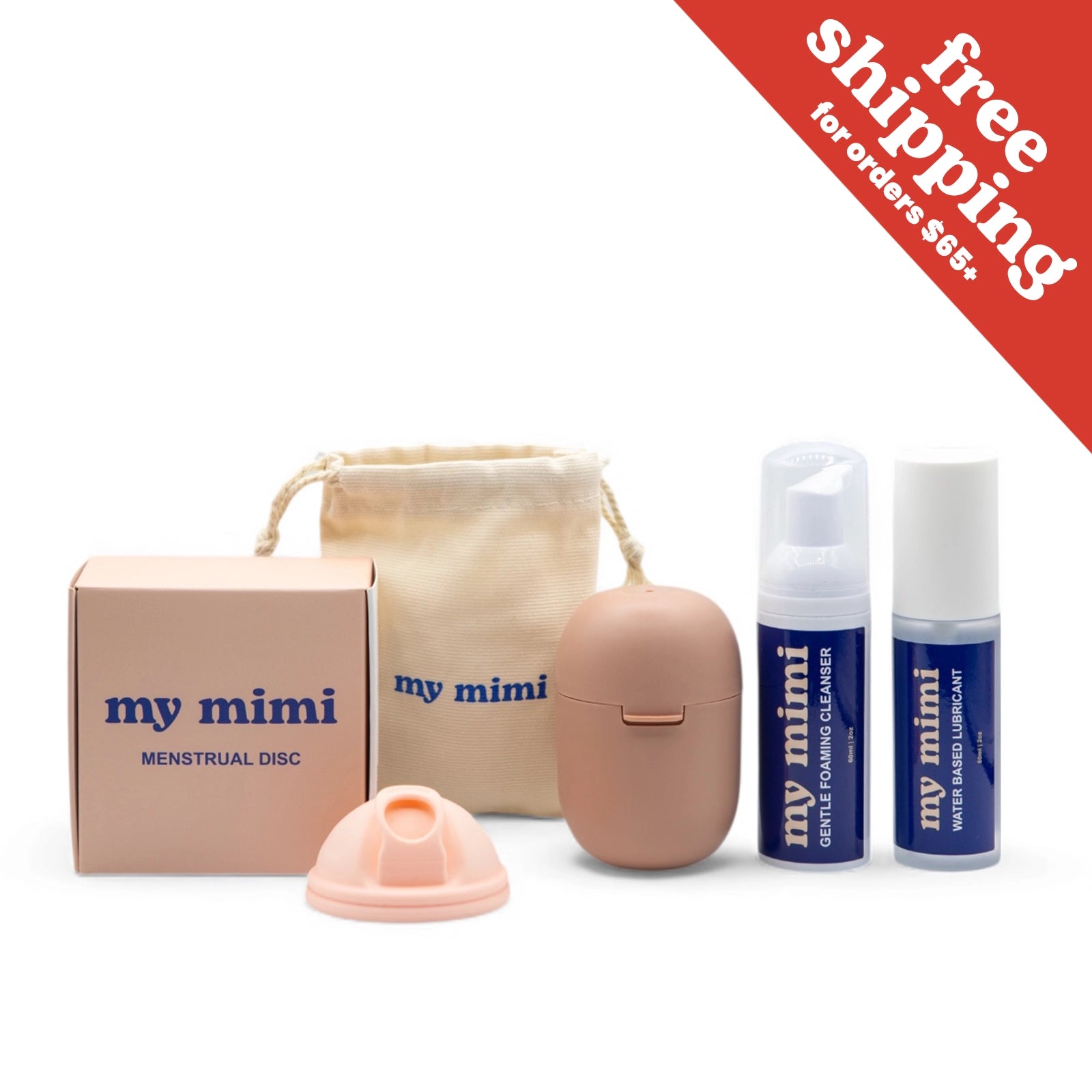
The reusable my mimi menstrual disc is made from medical-grade silicone, uses a suction-free design and includes an integrated loop to support removal. Two sizes offer more room to find a comfortable fit.
Explore the my mimi menstrual discFrequently asked questions
Why does my menstrual disc leak straight after insertion?
An immediate leak often means the rear rim has passed beside the cervix instead of beneath it. Remove the disc, aim horizontally towards the tailbone and ensure the cervix sits above the bowl before tucking the front rim.
How do I know whether my disc is inserted correctly?
It should generally feel comfortable and secure. The rear rim sits beneath the cervix, the front rim is tucked behind the pubic bone and the disc should not feel as though it is slipping towards the opening.
Is it normal to struggle at first?
Yes. A disc uses a different angle and placement from a tampon or cup, and learning may take several attempts or cycles. Practise without rushing, use backup protection and stop if it hurts.
Can a menstrual disc get lost?
No. The vaginal canal ends at the cervix. A disc can sit high or become harder to reach when muscles are tense, but it cannot travel into the uterus or elsewhere in the body.
How long can I wear a my mimi disc?
For up to 12 hours, depending on flow. Empty it sooner when required and always follow the instructions supplied with your product.
When should I seek medical advice?
Remove the disc and seek advice for significant or persistent pain, difficulty urinating, unusual discharge, fever, worsening symptoms or inability to remove it. Seek urgent care for possible toxic shock syndrome symptoms.
References and further reading
- US Food and Drug Administration: Menstrual Product Options, Facts, and Safe Use.
- healthdirect Australia: Toxic shock syndrome.
- my mimi: Complete first-use guide.
- my mimi: How to use a menstrual disc.
Health notice: This article provides general educational information and is not a substitute for personalised medical advice, diagnosis or treatment. Bodies, symptoms and product fit vary. Seek qualified care for severe, persistent, new or unusual symptoms.