
Body literacy · Menstrual health
What your cervix actually does during your cycle (and why it matters more than you think)
It is only a few centimetres long, yet the cervix helps menstrual fluid leave the uterus, changes its mucus to support or limit sperm movement, and shifts subtly as hormones rise and fall.
The short version: your cervix is not a static “door”. Across a typical ovulatory cycle, its position, softness, opening and mucus may change in response to oestrogen and progesterone. Those changes can offer useful clues—but bodies differ, and no single cervical sign is a diagnosis or a dependable method of contraception.
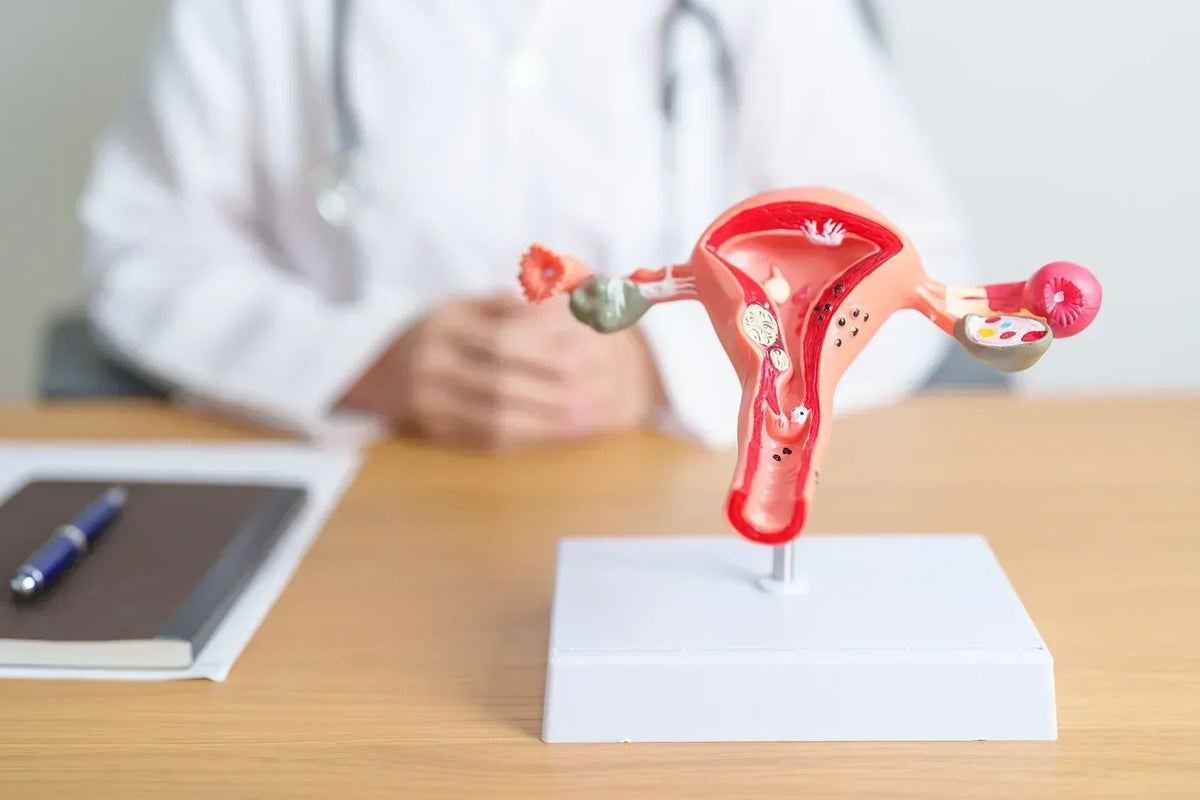
Most cycle talk gives the ovaries and uterus top billing. The cervix—the lower, narrow part of the uterus that opens into the vagina—rarely gets more than a supporting role. That undersells it. The cervical canal is the passage through which menstrual fluid leaves the uterus and sperm may enter. Glands in and around the cervix also produce mucus whose amount and consistency respond to cycle hormones.
People sometimes describe a cervix as feeling like the tip of a nose or a small, round doughnut with a dimple in the centre. That “dimple” is the external opening, or os. Its exact feel depends on your anatomy, whether you have given birth vaginally, the stage of your cycle and other factors. Some people can reach their cervix easily; others cannot. Both can be normal.
The cervix is a gatekeeper, passage and mucus-maker
The cervix forms the lower end of the uterus and projects into the top of the vagina. It is firm connective and muscular tissue rather than a loose flap. Most of the time, it helps form a barrier between the vagina and uterine cavity. Its mucus can make that barrier more or less receptive to sperm depending on the hormonal environment.
Near ovulation, rising oestrogen generally increases the quantity, water content and stretchiness of cervical mucus. It may look clear and feel slippery—often compared with raw egg white. This environment helps sperm travel through the cervix. After ovulation, progesterone generally makes mucus thicker and less elastic, which is less favourable to sperm transport. During menstruation, blood and tissue from the uterine lining pass through the cervical canal into the vagina.
The cervix also has an important role in pregnancy and birth. It usually remains closed during pregnancy, then softens, shortens and dilates during labour. Those pregnancy changes are different from the subtle variations people may notice during an ordinary menstrual cycle.
What may happen in each phase of your cycle
There is no universal day-by-day cervix timetable. Cycle length varies, and ovulation does not reliably happen on day 14. Hormonal contraception, breastfeeding, perimenopause, pregnancy, illness and conditions that affect ovulation may change or flatten the pattern. Treat the descriptions below as common tendencies, not rules.
Menstrual phase
Oestrogen and progesterone are low as the uterine lining sheds. The cervix may sit lower and feel firmer, and the os may be slightly open enough to allow menstrual fluid through. Blood makes mucus difficult to observe. Some people feel increased cervical sensitivity; many notice nothing at all.
Follicular phase
After bleeding, rising oestrogen supports development of the uterine lining and changes cervical mucus. There may first be little noticeable mucus, followed by sticky, creamy or increasingly wet fluid. The cervix may gradually rise and soften as ovulation approaches.
Ovulation
Near ovulation, the cervix is often described as higher, softer and slightly more open. Mucus tends to be more abundant, clear, slippery and stretchy. This can indicate a potentially fertile time, but observation alone cannot prove an egg was released or pinpoint the exact day.
Luteal phase
After ovulation, progesterone rises. Mucus usually becomes thicker, tackier or less noticeable, and the cervix often lowers, firms and feels more closed. If pregnancy does not occur, oestrogen and progesterone fall and the next period begins.
Why the careful words—“may”, “often” and “generally”? Because cervix checking is subjective. The difference between “medium” and “high” can be a fingertip’s reach, and squatting can bring the cervix lower. Sexual arousal temporarily lengthens the vagina, while bowel fullness, time of day and checking position can change what you feel. Patterns over several cycles are more meaningful than a single observation.
Interactive body-literacy guide
See how the pattern can shift
Choose a phase to see a simplified illustration of common changes. This is an educational model—not a diagnostic tool, fertility test or exact picture of every body.
During menstruation
Fluid passes from the uterus through the cervical canal. Position varies, though the cervix may be easier to reach.
Your own pattern may differ. Cervical position cannot confirm cycle phase, ovulation or pregnancy.
Do not self-check if your waters may have broken, if you have been advised to avoid vaginal insertion or pelvic activity, or after a cervical procedure until your clinician says it is appropriate. During pregnancy, do not use DIY cervical checks to assess labour or cervical dilation; contact your maternity care team.
Why cervix position matters for menstrual disc fit
A menstrual disc collects fluid in the vaginal fornix—the space surrounding the cervix—rather than sitting lower in the vaginal canal like many cups. For the disc to collect effectively, the back rim needs to travel beneath the cervix and the front rim must tuck behind the pubic bone. If the cervix sits outside the bowl, fluid can bypass the disc and leak.
Cervix height can influence reach and comfort. A lower cervix may make the available space feel shorter; a higher cervix may mean guiding the disc further back or bearing down gently during removal. But height is only one part of fit. The dimensions of the fornix, pubic-bone prominence, pelvic-floor tone, disc diameter, flow and personal comfort also matter. That is why “high cervix equals large disc” is too simplistic. See my mimi’s explanation of high and low cervical positions for more practical context.
If you use a disc, check placement with clean hands: aim back towards your tailbone, guide the rear rim below the cervix, then tuck the front edge securely. A correctly positioned disc should generally feel comfortable and stay in place. Persistent leaking, bladder pressure, pain or slipping may point to placement or sizing—not a failure on your part. See my mimi’s fit check, size guide and quiz, or the complete first-use guide.
Four common cervix myths, cleared up
“A high cervix means I am pregnant.”
Cervical position varies within and between people and is not a pregnancy test. If pregnancy is possible, use a home test according to its instructions. Seek healthcare advice for a late period with negative tests, pain, unusual bleeding or other concerns.
“An open cervix means something is wrong.”
The os can feel subtly different across the cycle, and its shape may be different after vaginal birth. You cannot accurately measure cervical dilation with a casual self-check. New bleeding, pain or unusual discharge—not a vague impression of openness—deserves clinical attention.
“Egg-white mucus proves I ovulated.”
Slippery, stretchy mucus commonly appears as oestrogen rises and can help identify potentially fertile days. It does not confirm that ovulation occurred. For contraception, cervical mucus methods require correct instruction and consistent use; a single sign or app prediction is not enough.
“A menstrual disc can pass through my cervix.”
It cannot. The cervical opening is not an open route for a menstrual product into the uterus. A disc may feel high or difficult to reach, especially when muscles are tense, but it remains in the vaginal canal. If you cannot remove it, do not force it; seek medical help.
Discharge: what is usual, and what is not?
Normal discharge may be clear, white or off-white and can shift from dry or sticky to creamy, wet and slippery across the cycle. Semen, arousal fluid, lubricants, infection, medicines and hormonal contraception can all change what you observe. Cervical mucus tracking is therefore about recognising your own repeated pattern, not matching a perfect internet chart. For a closer look at normal variation, read what vaginal discharge can look like.
A strong or unpleasant smell, green or grey discharge, cottage-cheese-like discharge with itching, sores, burning, pelvic pain or bleeding may indicate infection or another condition. Symptoms overlap, so self-diagnosing by colour alone is unreliable. A GP, sexual health clinic or other qualified clinician can assess the cause and arrange testing where appropriate.
When to seek medical advice
Arrange a healthcare appointment if you have a new, persistent or worrying change, including:
- bleeding after sex, between periods or after menopause
- pelvic pain, pain during sex or ongoing cervical tenderness
- unusual discharge, strong odour, itching, sores or burning
- periods that become much heavier, longer or more painful than usual
- difficulty inserting or removing a period product, or persistent pressure while wearing one
- concerns about fertility, cervical screening or a possible sexually transmitted infection.
Seek urgent care for severe or one-sided pelvic pain, fainting, fever with pelvic symptoms, very heavy bleeding, or pain and bleeding when pregnancy is possible. In Australia, call Triple Zero (000) for an emergency. my mimi’s guide to period pain and when to get help offers more general guidance.
Routine cervical screening matters even when you feel well, because cervical cell changes often cause no early symptoms. In Australia, follow the National Cervical Screening Program schedule that applies to you and speak with your clinician if you are overdue or unsure. Screening is different from a pelvic examination and cannot be replaced by self-checking.
Period care that works with your anatomy
Ready to find a menstrual disc fit that feels right?
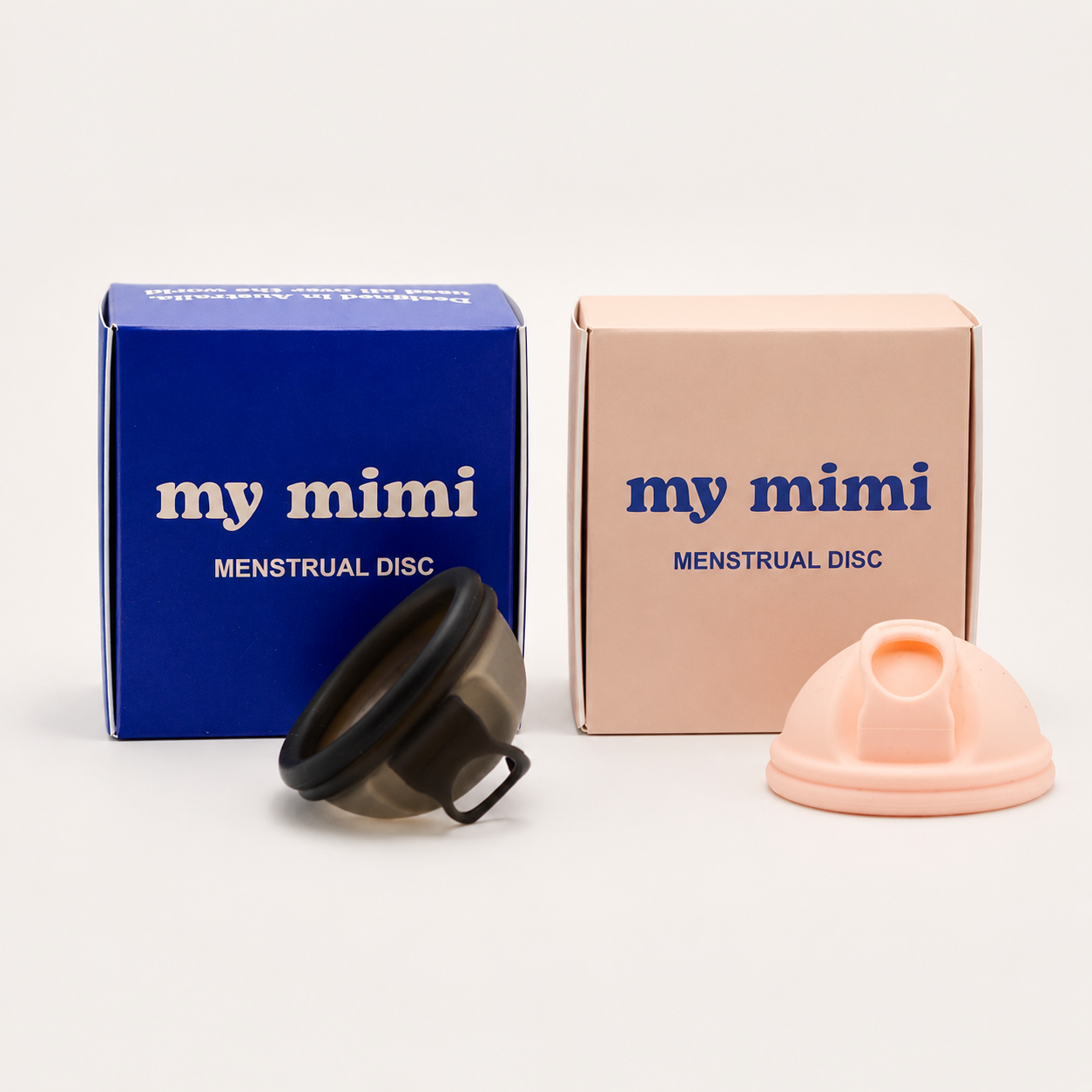
The reusable my mimi menstrual disc sits below the cervix, uses a suction-free design and includes a removal loop. Choose from two sizes, with guidance that considers more than one body measurement.
Explore the my mimi menstrual discFrequently asked questions
Does your cervix move during your menstrual cycle?
It can. Many people notice it sitting lower around menstruation, rising around ovulation and lowering afterwards, but timing and pattern vary. A single check cannot reliably identify your cycle phase.
What does a cervix feel like around ovulation?
Rising oestrogen may make it feel softer, higher and slightly more open. Cervical mucus often becomes wetter, clearer and more slippery. Not everyone can detect these changes.
Can cervical position confirm pregnancy?
No. Position varies too much to confirm pregnancy. Use a home pregnancy test at the appropriate time and seek clinical advice if the result is unclear or symptoms concern you.
Can I check my own cervix safely?
Self-checking is optional. If you choose to, wash your hands, keep nails smooth and stop if there is pain. Avoid checking when a clinician has advised pelvic rest, after procedures until cleared, or if your waters may have broken.
Does cervix height affect menstrual disc fit?
It can be one factor. A disc must sit beneath the cervix and tuck behind the pubic bone. Height, fornix dimensions, flow and comfort can all influence fit; height alone does not determine size. If you want to explore your anatomy, use my mimi’s gentle cervix-measuring guide.
When should cervical changes be checked by a doctor?
Seek advice for bleeding after sex, new or persistent bleeding between periods, unusual or offensive-smelling discharge, pelvic pain, fever or pain during sex. Seek urgent care for very heavy bleeding, severe pain, fainting or pregnancy-related concerns.
References and further reading
- MSD Manual Professional Edition: Female reproductive endocrinology — cervical and hormonal changes across the cycle.
- MSD Manual Consumer Version: Menstrual cycle — overview of cycle phases and progesterone-related mucus changes.
- Mayo Clinic: How to get pregnant — changes in cervical mucus around ovulation.
- NHS: Causes of infertility — the role of thinner cervical mucus near ovulation.
- Better Health Channel: Infertility in women — anatomy and cervical mucus information.
- Australian Government Department of Health: National Cervical Screening Program.
Health notice: This article provides general educational information and does not replace personalised advice, diagnosis or treatment from a qualified healthcare professional. Cervical patterns vary. If symptoms are severe, persistent, new or unusual, seek medical care.