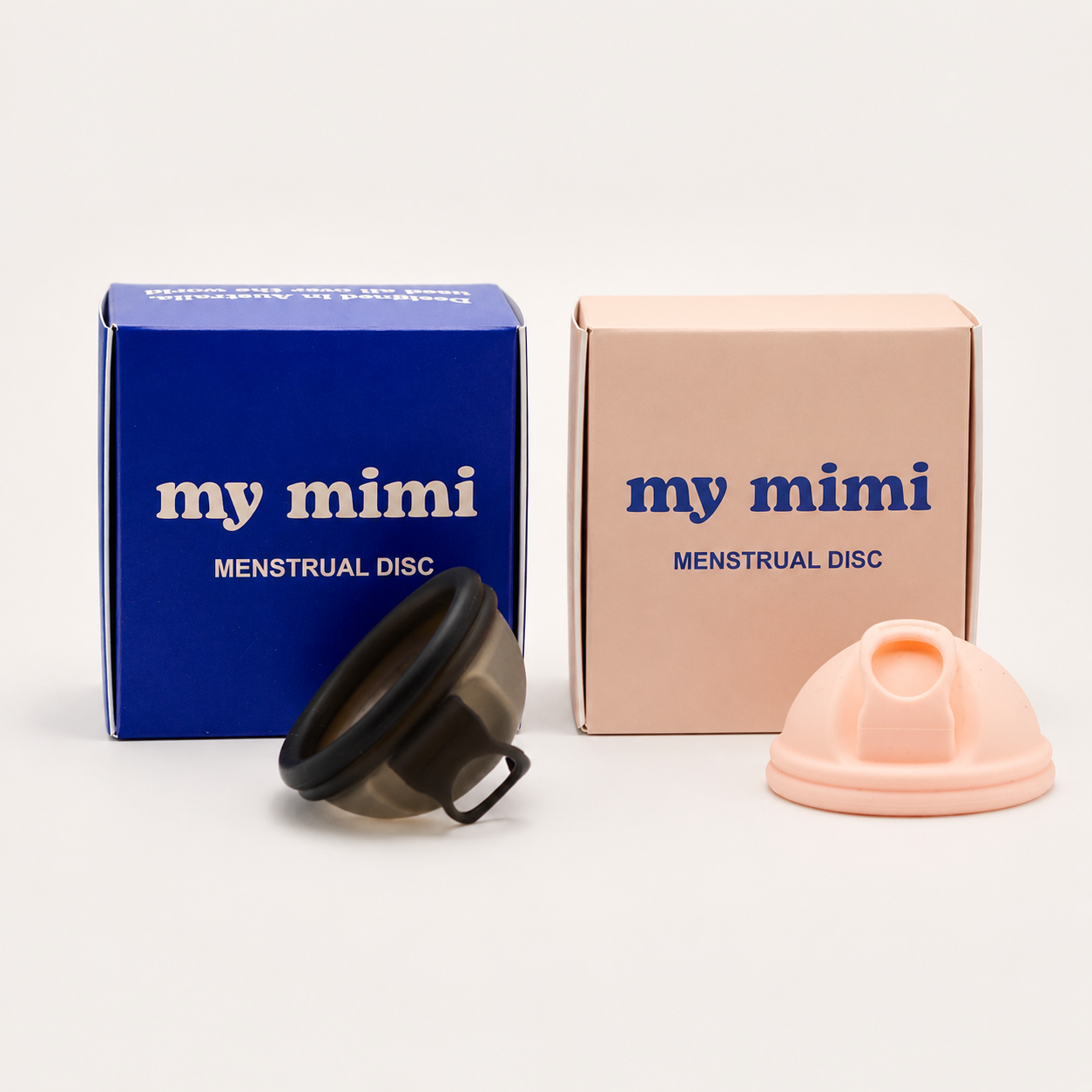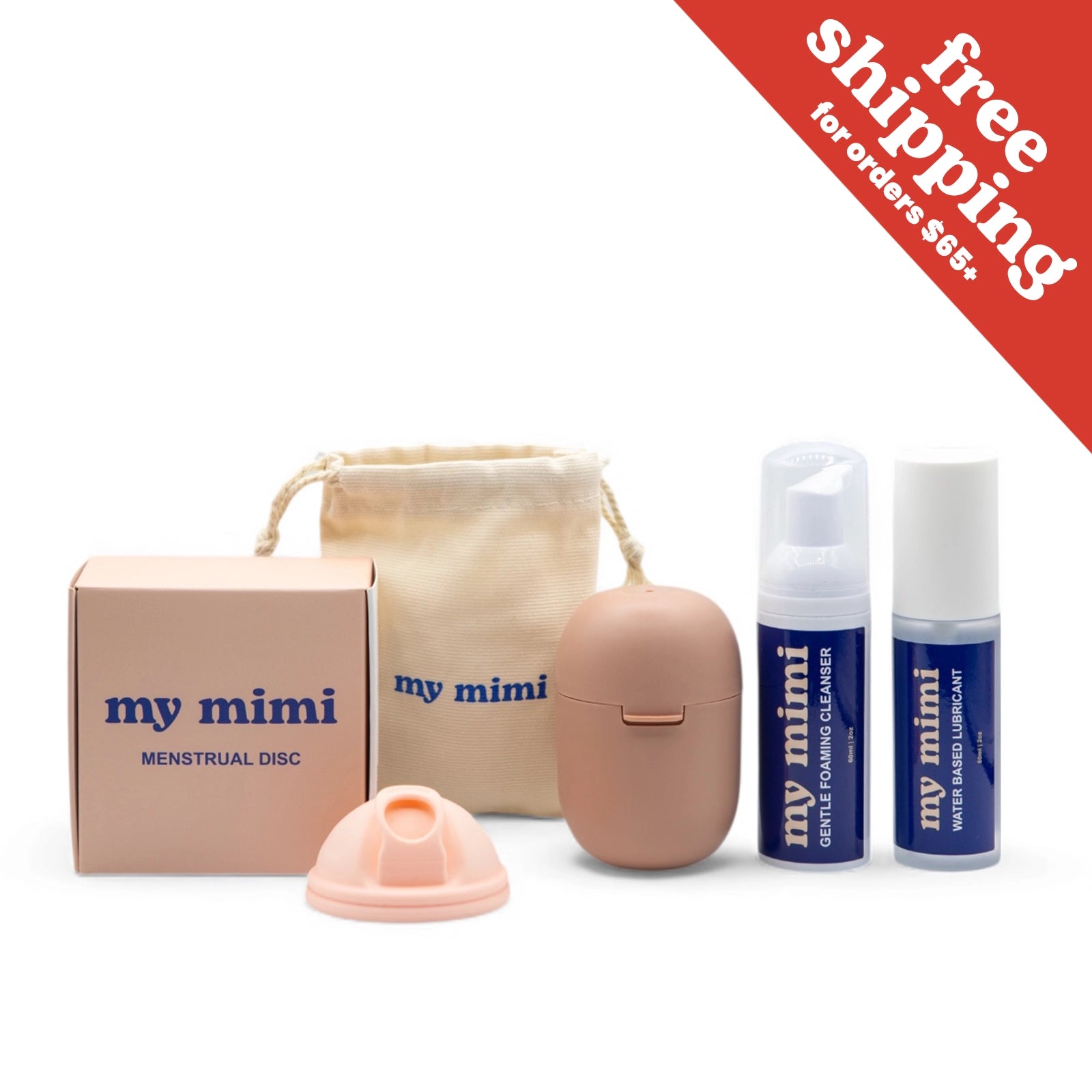


If you are thinking about trying a menstrual disc for the first time, one of the biggest questions is usually simple: what does it actually feel like? It is a fair question. A menstrual disc sits differently to a tampon or menstrual cup, so it can be hard to imagine what the experience will be like until you try one.
For many people, a menstrual disc feels surprisingly unnoticeable once it is inserted correctly. You may feel it briefly during insertion or removal, especially while you are learning, but once it is positioned properly, it should not feel painful, sharp, dry or distracting. Some people feel a light sense of pressure at first. Others feel almost nothing at all.
The my mimi menstrual disc is made from soft, flexible medical-grade silicone and is designed to sit in the vaginal fornix, behind the pubic bone. Unlike a menstrual cup, it does not rely on suction. That difference is one of the reasons many people find menstrual discs comfortable once they understand placement.
Quick answer: can you feel a menstrual disc?
When inserted correctly, most people should not strongly feel a menstrual disc during normal wear. It should sit high enough that it does not rub, press or feel like it is slipping out. If you can feel strong pressure, discomfort or the edge of the disc near the vaginal opening, it may not be inserted far enough, may not be tucked behind the pubic bone, or may not be the right size for your body.
What a menstrual disc feels like when it is inserted correctly
A correctly placed menstrual disc should feel secure but not intrusive. It should not feel like a tampon sitting low in the vaginal canal. It should not feel like a firm object pressing down. It should not feel like it is about to fall out. Instead, it should feel settled in place, with little awareness during everyday movement.
The main difference is placement. A tampon sits lower and absorbs flow. A menstrual disc sits higher and collects flow. Because the disc is positioned around the cervix area, many users find they are less aware of it once it is in the right place.
Some first-time users describe the feeling as unusual rather than uncomfortable. That is normal. You are learning a new product, a new insertion angle and a new position inside the body. The first attempt may feel clumsy. The second or third attempt often feels easier. By the time you have used a disc across a few cycles, the process usually feels much more natural.
What does insertion feel like?
Insertion usually feels different to inserting a tampon. A menstrual disc is folded before insertion, then guided back and slightly down so it can sit behind the pubic bone. The sensation can feel a little unfamiliar at first because the disc is wider than a tampon when unfolded, even though it is folded during insertion.
You may notice:
- a soft pressure while guiding the folded disc in
- a brief stretching sensation at the vaginal opening
- a need to adjust the angle before it feels right
- a slight tuck or placement sensation behind the pubic bone
Insertion should not feel sharply painful. If it does, pause, relax your pelvic floor, adjust your position and try again slowly. Some people find it easier to insert a disc while sitting on the toilet, standing with one leg raised, or squatting slightly in the shower.
If you are new to menstrual discs, you may find the beginner insertion guide helpful before your first attempt.
Should a menstrual disc hurt?
A menstrual disc should not hurt when it is correctly inserted and positioned. Mild awareness during the first few uses can happen, especially if you are tense or still learning. Pain, pinching, strong pressure or a feeling that something is sitting too low usually means something needs adjusting.
Discomfort may happen if:
- the disc is not inserted far enough
- the front rim is not tucked behind the pubic bone
- the disc is the wrong size for your anatomy
- your pelvic floor muscles are tense
- you are inserting too quickly or at the wrong angle
If discomfort keeps happening, review your size and placement. The my mimi size guide explains the difference between Small and Large and can help you check whether your disc is suited to your body.
What does a menstrual disc feel like while walking, sitting or moving?
During normal daily wear, a menstrual disc should feel secure and comfortable. Many people can walk, sit, work, drive, study and move around without noticing it. If you are aware of it every time you sit down, bend or walk, the disc may be sitting too low.
When positioned correctly, the disc should move with your body. It should not feel rigid. It should not scrape, rub or create a constant sensation. You may be more aware of it during your first cycle simply because you are thinking about it, checking for leaks and learning what normal feels like. That awareness often fades as confidence grows.
What does a menstrual disc feel like compared to a tampon?
A menstrual disc feels different to a tampon because it works differently. A tampon absorbs menstrual fluid and sits lower in the vaginal canal. A disc collects menstrual fluid and sits higher, around the cervix area.
| Tampon | Menstrual disc |
|---|---|
| Sits lower in the vaginal canal | Sits higher in the vaginal fornix |
| Absorbs menstrual fluid | Collects menstrual fluid |
| May feel dry for some users | Does not absorb natural moisture |
| Has a string outside the body | No string |
| Usually changed more often | Can be worn for up to 12 hours, depending on flow |
Some users prefer the feeling of a disc because there is no string, no dry removal sensation and no low sitting absorbent product. Others need a few attempts to get used to the wider shape and higher placement. Both experiences are normal.
What does a menstrual disc feel like during sleep?
During sleep, a menstrual disc should feel comfortable and secure. Because it has no string and sits higher than a tampon, many people find it easy to forget they are wearing one overnight. The key is making sure the disc is inserted correctly before going to bed.
If your disc feels comfortable while standing and sitting, it will often feel comfortable during sleep too. If it feels low, tilted or noticeable before bed, it is worth removing and reinserting it rather than hoping it will settle overnight.
You can learn more about overnight wear in this guide: can you sleep with a menstrual disc.
What does a menstrual disc feel like during exercise or swimming?
A well-positioned menstrual disc should not get in the way during exercise, swimming or everyday movement. Many people use menstrual discs for gym sessions, yoga, walking, swimming, running, pilates and sport because they are internal, string-free and designed for longer wear.
If you can feel the disc shifting during exercise, it may not be tucked properly behind the pubic bone. If you notice leaking during movement, the disc may be positioned beside the cervix rather than around it, or it may need adjusting after insertion.
For more active use, read the my mimi guides to menstrual discs for sport and exercise and swimming with a menstrual disc.
What if you can feel your menstrual disc?
If you can clearly feel your menstrual disc after insertion, it does not always mean discs are not for you. In many cases, it means the disc needs repositioning. A menstrual disc should not sit at the vaginal entrance. It should sit higher, with the front rim tucked behind the pubic bone.
You may need to adjust your disc if you feel:
- pressure near the vaginal opening
- a slipping or falling sensation
- discomfort when sitting
- pinching or rubbing
- leaking soon after insertion
- the rim sitting too low
If this happens, remove the disc, refold it and try inserting it a little further back before tucking the front rim up. The angle matters. A disc is not inserted straight up like some people expect. It needs to be guided back and then tucked into place.
If leaking is part of the issue, this page may help: why is my menstrual disc leaking.
Could the size affect how it feels?
Yes. Size can affect comfort, pressure and leak protection. A disc that is too large may create pressure or feel difficult to tuck into place. A disc that is too small may not sit securely or may be more likely to shift.
The my mimi menstrual disc comes in two sizes. The Small size holds 32ml and is generally suited to people under 30 or those who have not given birth vaginally. The Large size holds 61ml and is generally suited to people over 30 or those who have given birth vaginally. These are general guides only, as every body is different.
For the clearest fit guidance, visit what size menstrual disc should I get.
What does removal feel like?
Removal can feel a little unfamiliar at first, but it should not be painful. The goal is to relax, locate the rim or loop tab, gently untuck the disc and slowly remove it while keeping it as level as possible.
The my mimi menstrual disc includes a built-in loop tab designed to make removal feel easier and less intimidating, especially for beginners. It gives you a more obvious point to reach for, which can help reduce the panic some first-time users feel when trying to remove a disc.
You may feel a light release sensation as the disc untucks from behind the pubic bone. Some mess can happen while learning, especially during heavier flow days. That does not mean you are doing anything wrong. It usually becomes easier with practice.
For step-by-step support, read how to remove a menstrual disc.
How long does it take to get used to a menstrual disc?
Some people feel confident straight away. Others need a few cycles. Both are normal. Menstrual discs have a learning curve because they sit differently to tampons, pads and cups. Your first attempt does not need to be perfect.
It can help to practise when you are calm and not rushing. Some people try insertion in the shower. Others practise on a lighter day so they feel less pressure. Using water-based lubricant can also make insertion easier while you are learning.
Most discomfort or uncertainty in the early stages comes from learning the right angle, finding the pubic bone tuck and understanding what correct placement feels like. Once those steps become familiar, many users find the disc much easier to trust.
Who might feel a menstrual disc more than others?
Some people may be more aware of a menstrual disc because of cervix height, pelvic floor tension, sensitivity, postpartum changes, a tilted uterus or previous discomfort with internal products. This does not automatically mean a disc will not work, but it may mean you need more time, a different size or extra guidance.
If you have a low cervix, you may feel the disc more easily if it sits too low or is too large. If you have a high cervix, you may need to take more care with removal. If you have a tilted or retroverted uterus, insertion angle may matter more.
Useful supporting guides include how to measure your cervix and menstrual discs with a tilted or retroverted uterus.
Signs your menstrual disc is sitting correctly
Your menstrual disc is more likely to be sitting correctly if:
- you cannot strongly feel it during normal movement
- it does not feel like it is slipping out
- you do not feel sharp pressure or pinching
- the front rim feels tucked behind the pubic bone
- you can sit, walk and move comfortably
- leaking is reduced or absent once residual blood has cleared
If you are still unsure, read how do I know if my menstrual disc is in right.
Final thoughts
A menstrual disc should feel comfortable, secure and mostly unnoticeable once inserted correctly. It may feel different during your first few uses, but different does not always mean wrong. Often, it simply means your body and your hands are learning something new.
If you feel pain, strong pressure or constant awareness, check the placement, size and insertion angle. If the disc feels comfortable and stays in place, you are likely on the right track.
The my mimi menstrual disc is designed for soft, flexible, suction-free period care with up to 12 hours of wear, two size options and an easy-removal loop tab. For many first-time users, the biggest surprise is not how much they feel it. It is how quickly they stop noticing it at all.
Health Notice: This article is for information purposes only. It is not a substitute for medical advice. If you are experiencing symptoms of anxiety, depression or other mental health concerns, consult a qualified health professional.